

Australia and New Zealand are frequently combined into one journey. On a map, the pairing appears obvious. They share a corner of the world, speak the same primary language and offer extraordinary landscapes, food, wine and outdoor experiences.
But proximity does not automatically make them one destination.
Both countries deserve to be more than an add-on, and whether they belong in the same itinerary depends on time, season, pace and which regions you actually want to experience.
How Much Time Do You Need?
For a first-time traveler who wants to experience the highlights of both countries, 12 days is the minimum I would recommend.
Even then, the itinerary must be disciplined. A realistic journey might include two Australian cities and either the North Island or the South Island of New Zealand. It does not allow time to explore Australia broadly or experience both New Zealand islands properly.
If this is likely to be your only journey to the region, approximately 30 days creates a much stronger trip. That might mean 15 to 18 days in Australia and another 12 days in New Zealand.
That amount of time allows each country to have its own rhythm rather than turning the journey into a succession of airports, hotel changes and hurried introductions.
Australia Is a Continent, Not a Single Experience
Travelers often approach Australia as though its major sights can be collected during one relatively short visit.
A better comparison is Europe.
Australia’s states and territories can feel as different from one another as Italy, Iceland and Switzerland. Even within the same state, the experience can change as noticeably as traveling between Paris, Nice and Normandy.
Sydney, Melbourne, Tasmania, Queensland, the Red Centre, South Australia, Western Australia and the Northern Territory do not offer interchangeable versions of the same country. They have different climates, landscapes, cultures, food traditions and reasons for visiting.
Australia is home to Aboriginal and Torres Strait Islander cultures, among the oldest continuous living cultures in the world. It contains tropical rainforest, desert, wine regions, cosmopolitan cities and the world’s largest coral reef system. Its culinary and arts scenes are excellent, and the character of one region can feel completely different from another.
The country is far more complex than beaches, kangaroos and the occasional alarming spider.
Australians also tend to be remarkably down to earth and welcoming, which is one of the qualities that makes the country so enjoyable to explore.
Seasonality Can Make or Break the Itinerary
One of the most common mistakes is trying to visit too many Australian regions during the wrong season.
A traveler may want to experience the Great Barrier Reef in Queensland and visit Uluru on the same February itinerary without realizing that these regions present very different conditions.
February falls within Queensland’s wet season, bringing heat, humidity, marine stingers and the possibility of tropical weather. In Central Australia, temperatures around Uluru can be extremely high.
Both regions are extraordinary. That does not mean they belong together during every month of the year.
Australia’s reverse seasons are only part of the issue. Its tropical north, temperate south, interior desert and coastal regions operate according to different climatic patterns. There is no single “best time to visit Australia” that applies equally across the entire country.
The right question is: What is the best time for the Australia you want to experience?
Which Australian Regions Pair Best With New Zealand?
Tasmania and the eastern and southeastern regions of Australia generally pair most naturally with New Zealand.
Sydney, Melbourne and Tasmania can create a geographically and stylistically coherent Australian chapter before continuing to New Zealand. The flight connections are sensible, and the climates and experiences can often be aligned without adding excessive travel days.
If South Australia, Western Australia or the Northern Territory are central to the trip, I would usually allow Australia to remain the primary focus.
Those regions require time.
A more ambitious journey could include the Kimberley, a rail journey through the Australian interior, time around Alice Springs, Kangaroo Island and then New Zealand. It could be extraordinary, but it would be a major expedition rather than a conventional two-country vacation.
The fact that something can be connected does not mean it should be compressed.
New Zealand May Be Compact, but It Is Not a Quick Add-On
New Zealand is often compared with California, perhaps because both have a long north-to-south orientation. That shape matters. The country changes dramatically as you travel from the top of the North Island to the bottom of the South Island, with distinct climates, landscapes and regional experiences along the way.
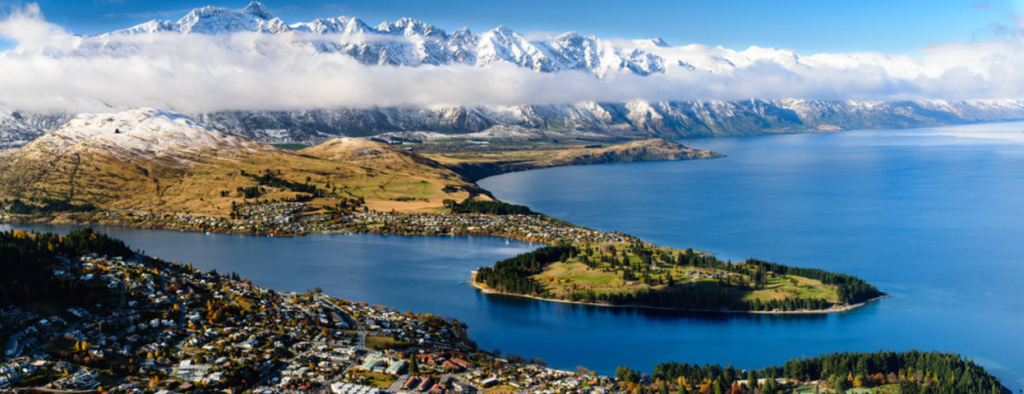
Getting around can be part of the journey. You might self-drive through wine country, travel by scenic rail, fly between distant regions or combine private touring with several forms of transportation.
Māori culture is integral to Aotearoa New Zealand and can be seen, heard and felt throughout the country, providing a cultural thread even as the scenery and character of each region change.
New Zealand rewards curiosity. You can spend your days hiking, sailing, golfing, exploring wineries, encountering wildlife or simply absorbing some of the most beautiful landscapes in the world.
It is not primarily a party or beach-club destination. Its appeal is more grounded: fresh food, remarkable scenery, welcoming people and a sense of space that makes you want to exhale.
Then, just as the landscape has convinced you to slow down, it may persuade you to go bungy jumping.
That balance between stillness and adventure is one of the reasons New Zealand deserves to be experienced rather than added hurriedly to the end of another trip.
Food Is Part of the Journey
The freshness and quality of the food in both countries is exceptional.
Australia’s dining scene reflects its multicultural population, regional agriculture, coastal access and excellent wine regions. New Zealand brings equally impressive produce, seafood, lamb and wine, often served without unnecessary complication.
I am not usually a mussels person, but Queenstown had me ordering more green-lipped mussels.
Perhaps it was the wine pairing.
Either way, both countries have a way of making familiar ingredients taste unexpectedly memorable.
Luxury Lodges and Golf Require Advance Planning
Australia and New Zealand are home to some of the finest luxury lodges in the world.
Many are deliberately small, which is part of their appeal. It also means availability can be limited, particularly during the most desirable seasons. The lodge experience is often tied closely to the landscape, whether that means a remote coastline, a vineyard, a mountain setting or the Australian bush.
Golf introduces another timing consideration. Both countries offer some of the world’s most beautiful courses, but weather, lodge availability, regional routing and tee times must work together.
A journey built around sought-after lodges or golf should be planned from those priorities outward rather than added after the broader itinerary has already been constructed.
When Combining Australia and New Zealand Works
A two-country journey can work beautifully when:
- You have enough time to give each country a meaningful portion of the trip.
- This may be your only visit to the region.
- The Australian regions you have chosen pair logically with New Zealand.
- The season supports every part of the itinerary.
- You enjoy variety and are comfortable changing locations.
- You are willing to make deliberate choices rather than attempting to see everything.
The countries complement one another without feeling repetitive. They share a certain openness, friendliness and appreciation for the natural world, but their cultures, histories, landscapes and overall energy are distinctly different.
When You Should Choose One Country
Choose one country if you are short on time, dislike frequent transitions or want to explore several regions within Australia.
You should also reconsider the combination if the destinations on your wish list require conflicting seasons or if New Zealand has been included mainly because it appears nearby on the map.
A focused journey does not mean seeing less. It often means experiencing more of what matters.
The Right Trip Is Not Measured by the Number of Countries
Australia and New Zealand belong together when the combination creates a richer journey, not simply a longer list of places visited.
With the right amount of time, compatible regions and thoughtful seasonal planning, the two countries can create an extraordinary contrast. Australia brings scale, cultural depth and enormous regional variety. New Zealand offers intimacy, movement through remarkable landscapes and a natural invitation to slow down or leap from something very high.
Both deserve to be experienced on their own terms.
The goal is not to fit two countries into one trip. It is to design one journey in which both countries have room to matter.